
Kalymnos
3.5/5The sponge divers' island — world-class climbing, vertical limestone cliffs and a deep sea tradition
Pothia's sponge heritage, the climbing villages of the west coast, and the beaches and caves of Telendos.
Why 3.5: good value and real history and character, and nothing that actively lets it down.
Kalymnos is a working sponge port that turned into one of the world's top climbing islands. For millennia it was the sponge-diving capital of the Aegean — its divers worked the whole Mediterranean as far as Libya, going to 100m without equipment, many dying of the bends. The economy has changed; the identity has not — hard, hardworking, tied to the sea. Since 1997 its limestone has taken more than 3000 bolted routes, and Masouri is a village built entirely around the sport, below the huge overhang of the Grande Grotta. You do not have to climb: Pothia has the finest Italian-era waterfront in the Dodecanese outside Rhodes and Kos, its museum holds the Lady of Kalymnos, a bronze pulled from the sea in 1994, the medieval Chora sits above with a Knights' castle, and car-free Telendos — split off by an earthquake in 554 AD — has lunch by the water, a quiet pebble cove and the sunset view across the channel. Every beach here is pebble, and August is simply too hot. Come in September to swim, March to climb. Most people fly to Kos and take the 30-minute shuttle from Mastichari.
Good for
- Climbers — more than 3,000 bolted routes on limestone, and Masouri is a village built entirely around the sport
- Anyone drawn to working maritime history — Pothia was the sponge-diving capital of the Aegean and still looks it
- Day-boat people — car-free Telendos is ten minutes across, with lunch by the water and the sunset view back across the channel
Maybe skip if
- If you want sand — every beach on Kalymnos is pebble
- If August is your only window — the island is simply too hot then, and the climbing season runs October to April
Getting there
Small domestic airport (Sky Express). Direct Piraeus ferry exists (10–13h overnight), but the most common entry is flying to Kos and taking the 30-minute shuttle from Mastichari. Frequent daily.
Tip: For the climbing season (Oct–Apr) the Kos shuttle is your friend — direct ferries thin out.
Best time to visit Kalymnos
Kalymnos is Greece's climbing capital — over 3000 sport routes carved into limestone cliffs. Climbers come November to April when it's cool. Swimmers come June to September. The two communities barely overlap. Sponge diving heritage everywhere. Easter is intense; Anastenaria fire-walking on the Tuesday after Easter is the wildest event of the year.
Top beaches of Kalymnos
Myrties Beach

The best-known beach on Kalymnos — pebble shoreline with extraordinary views across to the islet of Telendos. The sunset here is one of the best in the Dodecanese. The water is exceptionally clear and the tavernas on the waterfront are excellent.
- Type
- Pebble
- Length
- 500 m
- Depth
- Medium — clear water
- Wind
- Avoid visiting when the wind blows from the southwest to northwest at over 4 Bft. West-facing — sheltered from the meltemi (the summer N/NE wind); calm most summer days, sometimes choppy on rare westerly winds
- Facilities
- Good: sunbeds, tavernas, water sports. The most developed beach on Kalymnos.
Hochlakas Beach (Telendos)
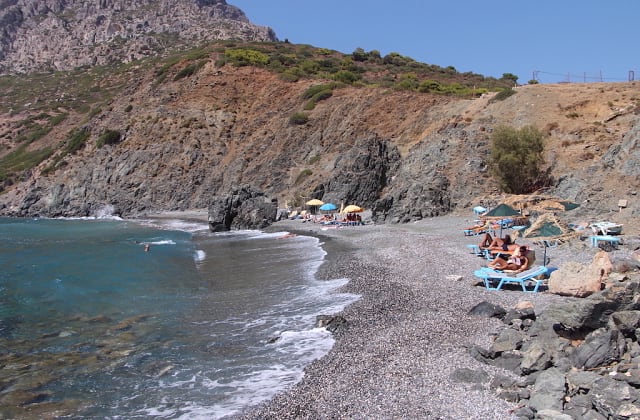
A pebble cove a short walk from Telendos village — clear water and few people. A pleasant swim if you are already on Telendos, not a reason to make the crossing.
- Type
- White pebble
- Length
- 400 m
- Depth
- Medium — crystal clear water
- Wind
- Avoid visiting when the wind blows from the northeast to southeast at over 5 Bft. East-facing — mostly sheltered from the meltemi (the summer N/NE wind); can be choppy on the strongest NE days
- Facilities
- Basic: small taverna, no cars on the island.
Emborios Beach
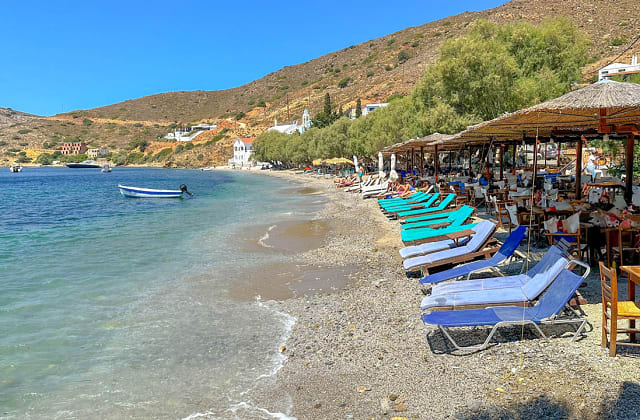
A quieter pebble beach at the northern tip of the island, in the traditional fishing village of Emborios. Less crowded than Myrties, good tavernas and a relaxed atmosphere.
- Type
- Pebble
- Length
- 300 m
- Depth
- Medium — clear water
- Wind
- Avoid visiting when the wind blows from the northwest to northeast at over 5 Bft. North-facing — fully exposed to the meltemi (the dominant summer N/NE wind); often choppy June–September
- Facilities
- Basic: tavernas, small pension hotels. Quiet.
3-day itinerary for Kalymnos
Read the day-by-day plan on its own page →
Day 1: Pothia & the Sponge Heritage
- 09:00 · Pothia
The capital — a working Greek port built on the slopes above a natural harbour. The Italian-era waterfront buildings are the finest in the Dodecanese outside Rhodes and Kos. Not pretty in a Cycladic sense but genuinely interesting.
- 10:00 · Sponge Factory & Museum
Working sponge factories line the harbour — buy a genuine Kalymnos sponge. The small Nautical Museum tells the extraordinary and tragic story of the island's sponge-diving industry. - 11:30 · Archaeological Museum
Small but excellent museum including the Lady of Kalymnos, a magnificent 1st-century BC bronze statue recovered from the sea in 1994. A rare survival.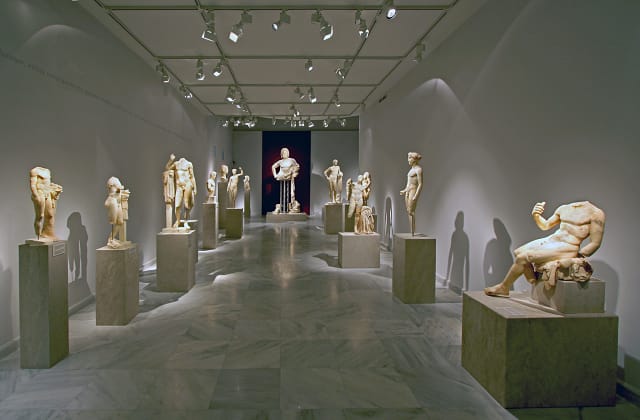
- 14:00 · Chora (Old Capital)
The old Byzantine capital above Pothia — a medieval village with a Knights' castle and views over the island. Quieter and more atmospheric than the modern port.
- 17:00 · Myrties Beach
After Chora, the natural detour west drops you at Myrties — the prettiest beach on the island, looking directly across the narrow channel to Telendos islet. Fine sand and pebbles, taverns set just back from the water, and the famous Telendos sunset as the cliffs opposite catch the last light. A perfect transition before returning to Pothia for dinner.
- 🍴 Stop for dinner · Pothia — see Eat & Drink below
Day 2: Masouri & the Climbing Coast
- 09:30 · Masouri
The climbing capital of Kalymnos — a lively village on the west coast entirely built around the sport. Shops selling gear, cafes full of climbers from every country. Even if you don't climb, it's a fascinating scene.
- 11:00 · Grande Grotta
The largest and most famous climbing cave on Kalymnos — a huge overhanging limestone cavern above the coast. Free to visit. Watch the climbers above while swimming below.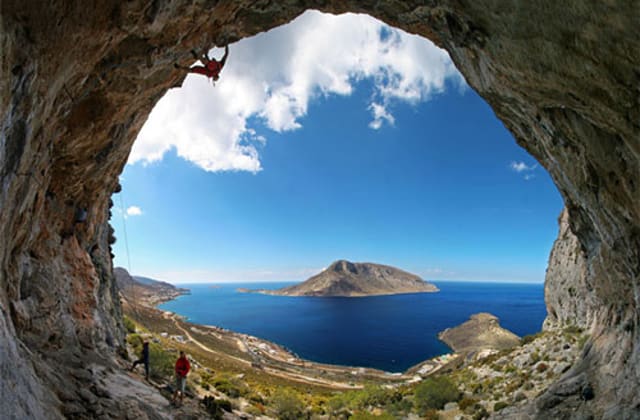
- 13:00 · Myrties Beach
Pebble beach next to Masouri, with the islet of Telendos directly opposite — one of the most dramatic views in the Dodecanese. Good tavernas on the waterfront. - 16:00 · Emborios Village
Traditional fishing village at the northern end of the island — small pebble beach, a handful of tavernas, and a refreshingly unhurried pace compared to Masouri. - 🍴 Stop for dinner · Masouri — see Eat & Drink below
Day 3: Telendos Island & Departure
- 10:00 · Telendos Boat
Small boat from Myrties — the crossing takes 10 minutes. Telendos broke off from Kalymnos in an earthquake in 554 AD. No cars on the island.
- 10:15 · Telendos Village
A tiny car-free village with a few tavernas, a small hotel and a quiet pebble cove (Hochlakas) a short walk away. Good lunch at one of the waterfront tavernas, with Kalymnos across the channel.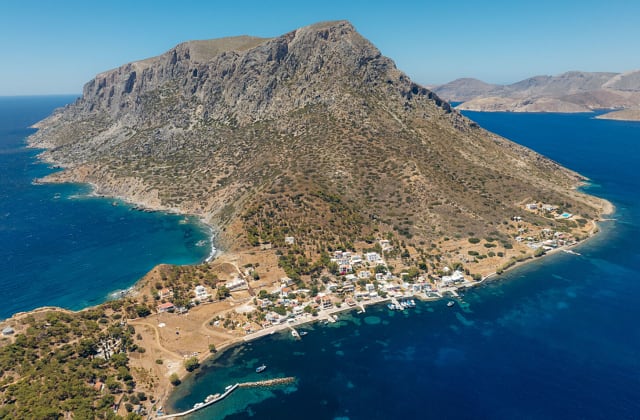
- 11:30 · Hochlakas Beach
Pebble cove a short walk from Telendos village — clear water and quiet. A good swim before the boat back rather than a highlight in itself. - 16:30 · Pothia — Departure
Ferry to Kos (frequent), Leros, Patmos, Piraeus or Rhodes. Kalymnos has its own small airport with Athens flights.