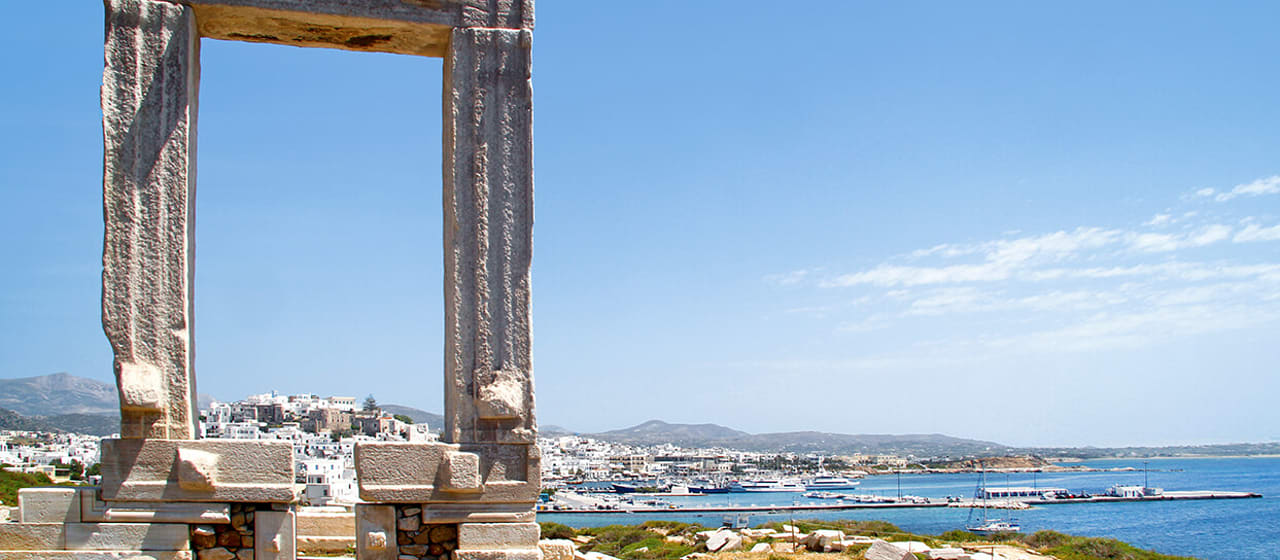
Naxos
4.5/5The Cyclades done properly — marble mountains, ancient temples and Europe's best beaches
Naxos Town's Venetian castle, the Temple of Apollo, the marble villages of the interior, and the extraordinary west-coast beaches.
Why 4.5: some of the best beaches in Greece and exceptional history and architecture, and no real weak spot.
The one Cycladic island where the mountain villages are as good as the beaches. Naxos is the largest and most self-sufficient of the Cyclades — marble quarries, Venetian towers, Byzantine churches and a working interior that still makes its own graviera, kitron and potatoes. Plaka is 5km of uninterrupted white sand with tamarisk shade, arguably the finest beach in the Cyclades, and Agios Prokopios is ten minutes from town; inland, Halki has the Vallindras distillery where the citron-leaf kitron is made, Apeiranthos is built of marble and still has working sculptors, and Mount Zas is a proper walk. The Portara — a 6th-century BC marble gateway to a temple that was never finished — is the island's image, and best at sunset. If nightlife is the point, this is not your island, at 3.5; Naxos is for families, walkers and eaters. May, June and September are the island at its best; in August the Meltemi howls, good for windsurfers, less so for beach days, and Plaka goes towel-to-towel; ferries from Piraeus run year-round, 3.5 hours on the fast boat.
Good for
- Families with small children — Plaka and Agios Prokopios are flat white sand with shallow, gently shelving water
- Anyone who wants ancient marble — the Portara is a 6th-century BC temple gateway left unfinished, best at sunset
- Walkers and eaters — Mount Zas is a proper climb and the interior still makes its own graviera, kitron and potatoes
Maybe skip if
- If nightlife is the point — this is an island for families, walkers and eaters, not for clubs
- If August is your only window — Plaka goes towel-to-towel and the Meltemi howls across the west-coast beaches
Naxos for families
Naxos is the best Greek island for families with young children — and the comparison isn't close. The beaches on the south-west coast are flat sand with shallow, gently shelving water; the Chora has space to walk without traffic chaos; and the island is large enough that a week of variety is genuinely possible without a single boat trip.
The beaches do the heavy lifting. Plaka, Agios Prokopios and Kastraki are long stretches of fine white sand with shallow, calm water. The water stays shallow a long way out, which is why families love them — but the meltemi can bring waves in July and August, so on windy days pick the sheltered end and keep small children close. All three are organised in part (sunbeds, beach bars, lifeguards in summer) but big enough that you can also walk 200m down the sand and find a quiet patch. If you have toddlers, this is what you came for.
Practical logistics are the second reason Naxos wins. It has an airport (small but functional) with flights from Athens, which means no 4-hour ferry from Piraeus with a stroller and a tired toddler. If you do come by ferry, the port is in the Chora — five minutes' walk to most family accommodation. Restaurants understand families: highchairs are common, kitchens are flexible about portions and timing, and nobody minds if a child runs around between courses.
Beyond the beach. The Chora has a Venetian castle (Kastro) that older kids treat as a playground — narrow stone alleys, gates, towers, views. The inland villages — Halki, Filoti, Apeiranthos — make a good full-day drive with stops for ice cream and the marble kouros statues. Mount Zas is a real hike for active 8+ kids. A morning at the Mikri Vigla kitesurf beach is a thrill for teenagers. Rainy day fallback: the Archaeological Museum in the Chora and the Della Rocca-Barozzi Venetian Museum, both small and manageable.
Where to stay. Agios Prokopios and Agia Anna both have walkable strips with apartments, family-run hotels, and dozens of taverna options 10 metres from the sand. Plaka is calmer and more spread out — better for a family that wants space, less ideal if you need a quick taverna run for an exhausted child. Avoid the Chora itself if your kids are small: the old town is charming but the stairs and cobbles make stroller logistics genuinely difficult.
Food. Naxos is a food island. Local potatoes, soft graviera cheese, fresh fish, lamb. Even fussy eaters find something — pasta, grilled chicken, plain bread, yogurt with the island's own honey. Mealtimes are flexible: tavernas serve from noon to midnight, and nobody expects you to be done in 90 minutes.
When to go. Late May, June and September are ideal — warm enough to swim, calm seas, manageable crowds, hotel prices below peak. July and August work but August in particular brings the meltemi (the strong summer north wind), which can make some beaches choppy and uncomfortable for very small children. The south-coast beaches stay sheltered even when the meltemi is blowing — that's another point in Naxos's favor.
Getting there
Small domestic airport (Olympic, Sky Express). Ferries dock at Naxos Town. Fast ferries from Piraeus ~3.5h, Blue Star conventional ~5–6h, multiple daily year-round. Also served from Rafina.
Tip: Naxos and Paros are 30 minutes apart — easy to combine.
Best time to visit Naxos
May, June and September are Naxos at its best. The island is big enough to absorb August crowds without feeling unbearable, but Plaka beach gets towel-to-towel and the hilltop villages bake. Easter on Naxos is wonderful — the Filoti panigiri runs into the small hours.
Top beaches of Naxos
Plaka Beach
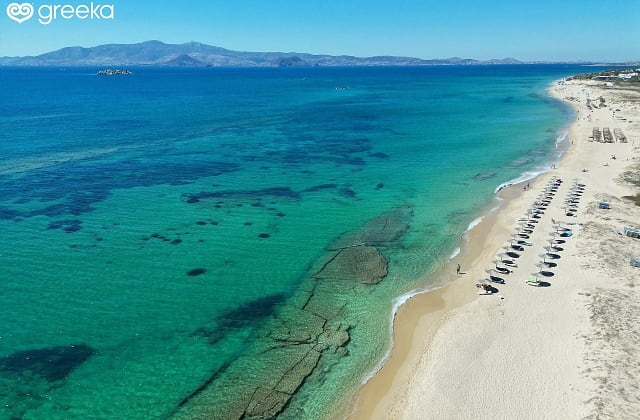
Arguably the finest beach in the Cyclades — 5km of uninterrupted fine white sand and turquoise water with natural shade from tamarisk trees. The southern end is wilder and more private. One of the longest, least-developed quality beaches in Greece.
- Type
- Fine white sand
- Length
- 5 km
- Depth
- Shallow — very gradual entry, excellent for all swimmers
- Wind
- Avoid visiting when the wind blows from the southwest to northwest at over 5 Bft. West-facing — sheltered from the meltemi (the summer N/NE wind); calm most summer days, sometimes choppy on rare westerly winds
- Facilities
- Northern section well organised; southern section wilder. Natural shade from tamarisk trees. The dunes are protected — no camping on the beach; campsites just inland.
Agios Prokopios Beach
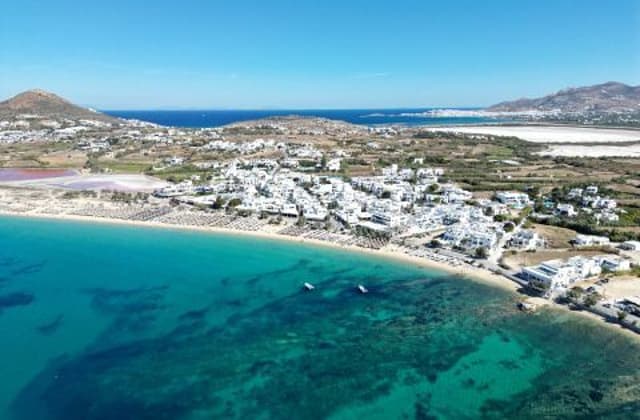
Consistently voted one of the best beaches in Greece — fine white sand, clear shallow water and excellent facilities, just 10 minutes from Naxos Town. The combination of easy access and quality makes it the most popular beach on the island.
- Type
- Fine white sand
- Length
- 1.5 km
- Depth
- Shallow — crystal clear water, gently shelving
- Wind
- Avoid visiting when the wind blows from the southwest to northwest at over 4 Bft. West-facing — sheltered from the meltemi (the summer N/NE wind); calm most summer days, sometimes choppy on rare westerly winds
- Facilities
- Well organised: sunbeds, beach bars, water sports, tavernas. Best facilities of the west-coast beaches.
Kastraki Beach
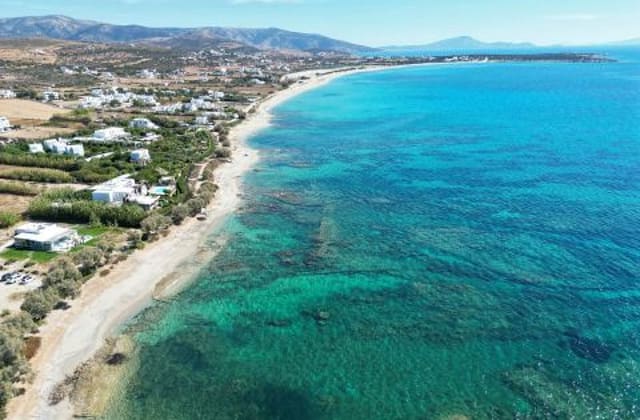
The wild continuation of Plaka beach southward — same quality white sand and turquoise water but fewer people and facilities. The dunes are protected and wild camping is not allowed in Greece — there are campsites just inland. The most natural and unspoiled stretch of Naxos's extraordinary west coast.
- Type
- Fine white sand
- Length
- 3 km
- Depth
- Shallow — open sandy bottom
- Wind
- Avoid visiting when the wind blows from the southwest to northwest at over 4 Bft. West-facing — sheltered from the meltemi (the summer N/NE wind); calm most summer days, sometimes choppy on rare westerly winds
- Facilities
- Basic to moderate — a few beach bars and tavernas, less developed than Plaka or Agios Prokopios.
4-day itinerary for Naxos
Read the day-by-day plan on its own page →
Day 1: Naxos Town & the Portara
- 09:00 · Portara (Temple of Apollo)
The 6th-century BC marble gateway to an unfinished Temple of Apollo on a small island connected to Naxos Town by a causeway. The most iconic image of the island. Extraordinary at sunset.
- 10:00 · Naxos Old Town (Kastro)
Venetian castle crowning the old town — a maze of arched lanes, Catholic churches and Venetian towers. The Archaeological Museum inside the kastro has superb Cycladic marble figurines.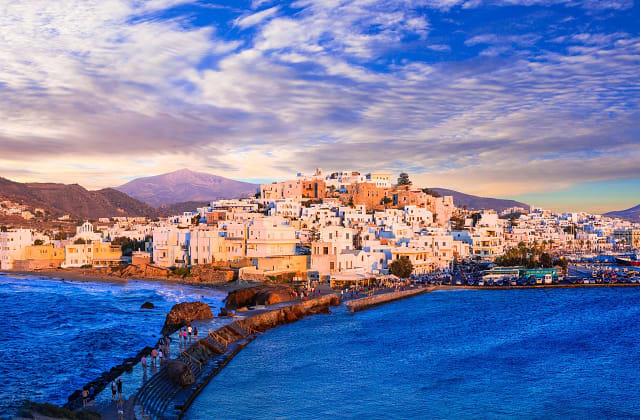
- 12:00 · Naxos Market Street
The main commercial street below the kastro — excellent local produce: Naxian cheese (graviera), thyme honey, Kitron liqueur made from citron leaves, local potatoes. Buy supplies for the beach.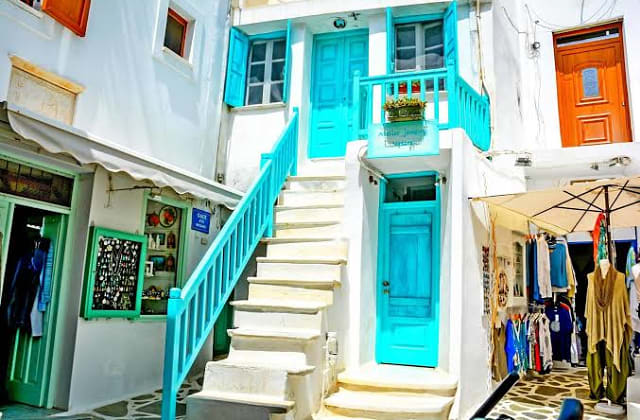
- 15:00 · Agios Prokopios Beach
One of the finest beaches in the Cyclades — fine white sand, clear shallow water, well organised. A 10-minute drive from the town. The water here is the best swimming in the northern section.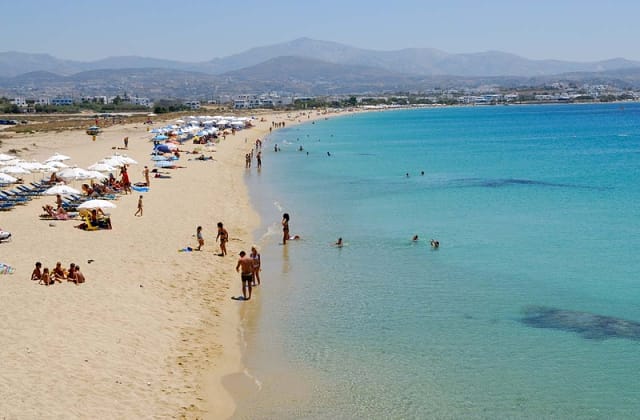
- 20:30 · Dinner in Naxos Town
Short drive (10 minutes) or bus back to Naxos Town. Dinner in the Old Market or one of the seafront tavernas under the Kastro walls.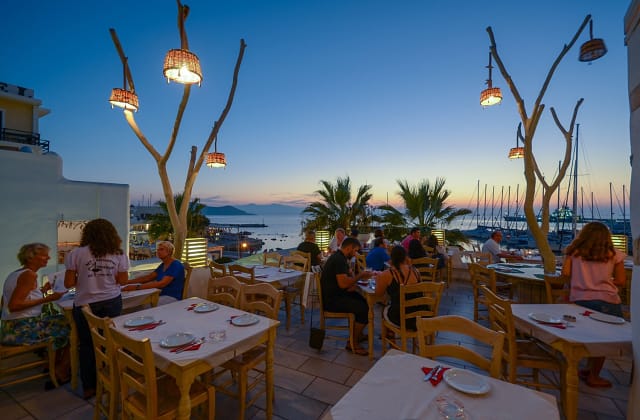
Day 2: Plaka & the West Coast
- 09:30 · Agios Georgios Beach
Town beach immediately south of Naxos Town — long, sandy, shallow and extremely convenient. The resort area behind it has every facility. Good for families staying in the town.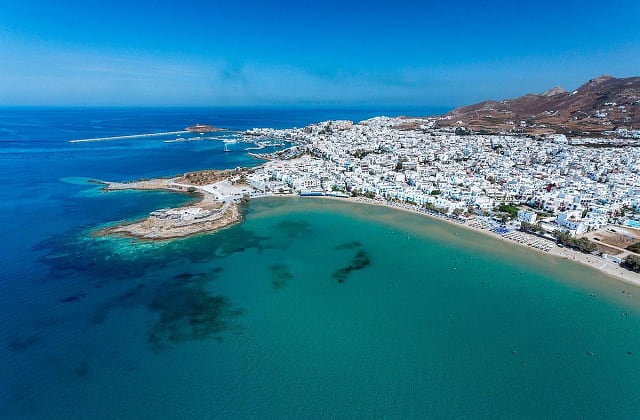
- 11:00 · Plaka Beach
The finest beach in the Cyclades — 5km of uninterrupted fine white sand with crystal clear, shallow turquoise water. The entire beach is backed by dunes and tamarisk trees providing natural shade. The southern end is less developed and more peaceful.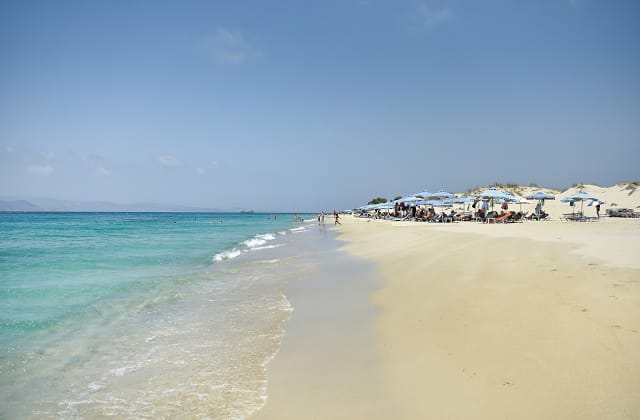
- 14:30 · Kastraki Beach
Quieter continuation of Plaka south — same quality sand and water but fewer facilities and people. The dunes are protected and wild camping is not allowed in Greece — there are campsites just inland. The most unspoiled section of the long west-coast beach.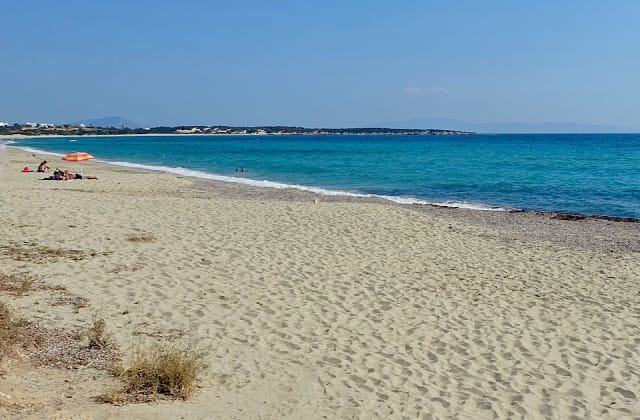
- 18:00 · Vivlos Village
Traditional inland village above the west coast. The views over Plaka beach and the sunset are exceptional. Several good tavernas with local Naxian dishes.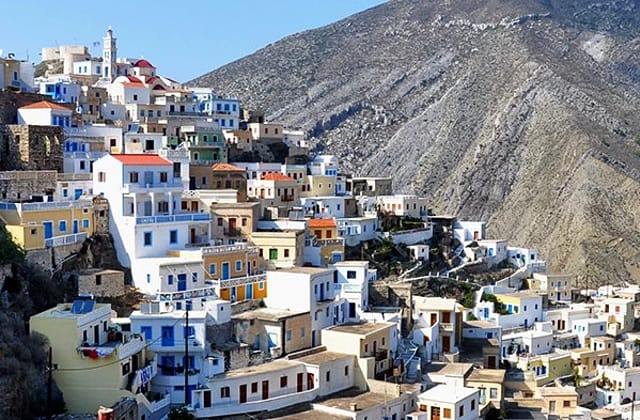
- 🍴 Stop for dinner · Plaka — see Eat & Drink below
- 20:00 · Sunset in Naxos Town
Drive back from the west coast and inland villages to Naxos Town (about 25 minutes). Sunset over the Portara is best caught now — perfect for an evening stroll along the causeway.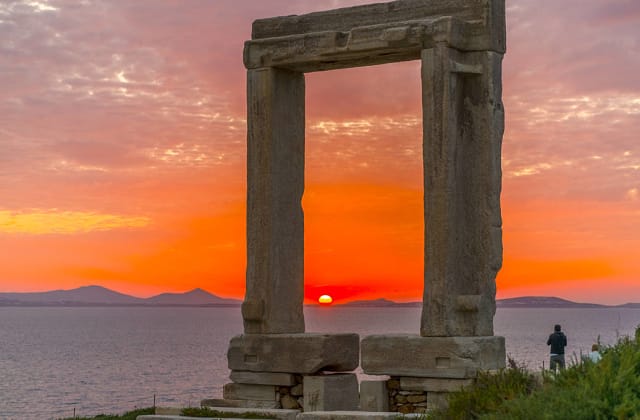
Day 3: Marble Villages & Mount Zeus
- 09:30 · Halki Village
🚗 ≈25 min inland from Naxos Town
The finest village in the Naxos interior — Venetian towers, Byzantine churches and a distillery producing Kitron liqueur from the island's unique citron fruit. Breakfast at a village café.
- 10:30 · Panagia Drosiani
One of the oldest Byzantine churches in the Cyclades (7th century), with rare early Christian frescoes surviving inside. Rarely visited and genuinely moving.
- 12:00 · Apeiranthos Village
🚗 ≈45 min into the mountains
The most dramatic mountain village in the Cyclades — marble-paved streets, marble doorways and a fiercely independent character. The village has five small museums. Lunch at the village square.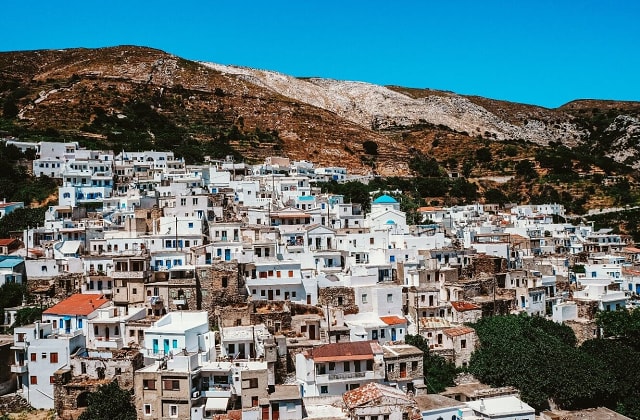
- 15:30 · Mount Zeus (Zas)
The highest peak in the Cyclades at 1001m. A 3-hour return hike through the fir forest past the Cave of Zeus. The view from the summit over the entire Cyclades archipelago is unbeatable on a clear day.
- 🍴 Stop for dinner · the mountain villages — see Eat & Drink below
- 20:00 · Dinner in Naxos Town
Drive back through the marble villages and down to Naxos Town (about 45 minutes from Mount Zas). After a day in the mountains, dinner with sea views is welcome.
Day 4: Ancient Kouros & Departure
- 09:30 · Kouros of Apollonas
A 10.5-metre unfinished marble kouros statue abandoned in the ancient marble quarry — too large to move, it has lain here since the 7th century BC. Free, unguarded, and extraordinary.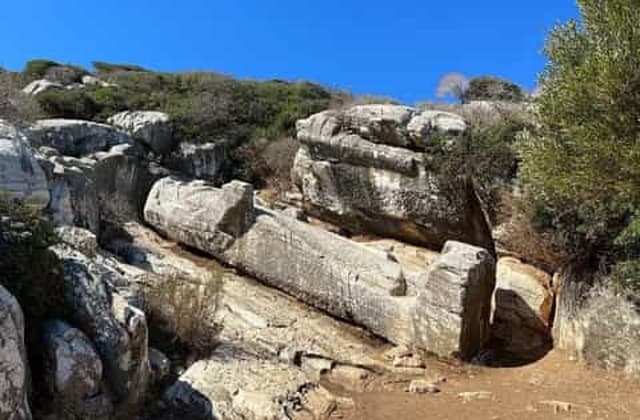
- 11:00 · Apollonas Beach
Sandy beach in the fishing village of Apollonas on the north coast. Calm, clear water, good tavernas. Less visited than the west coast.
- 15:00 · Naxos Town — Departure
Return to Naxos Town for the ferry. Buy Naxian cheese and honey for the boat.
Local & Seasonal
Local Specialties
Crafts & Souvenirs
Festivals & Events
How does Naxos compare?
Naxos vs Amorgos · Naxos vs Milos · Naxos vs Mykonos · Naxos vs Paros · Naxos vs Rhodes